
Silver Diamine Fluoride
Facts for consideration:
Silver diamine fluoride (SDF) is an FDA approved antibiotic liquid. We use SDF on cavities to help stop tooth decay. We also use it to treat tooth sensitivity. SDF application every three to six months as necessary until the desired results are achieved.
The procedure: 1. Dry the affected area. 2. Topically place a small amount of SDF on the affected area. 3. Allow SDF to dry for one minute. 4. Rinse.
Treatment with SDF does not eliminate the need for dental fillings or crowns to repair function or esthetics. Additional procedures will incur a separate fee.
Your child should not be treated with SDF if: 1. An allergy to silver. 2. There are painful sores or raw areas on the gums (i.e., ulcerative gingivitis) or anywhere in the mouth (i.e., stomatitis).
Benefits of receiving SDF:
Non-Invasive: No drilling or local anesthetic is required.
Strengthens Teeth: It re-mineralizes the natural tooth structure and prevents biofilm (plaque) from sticking to the surface.
Reduces Sensitivity: It can provide relief for teeth sensitive to hot or cold.
Avoids Fillings: It can arrest up to 80% of "open" cavities when applied twice a year, potentially delaying or even avoiding the need for traditional restorations.
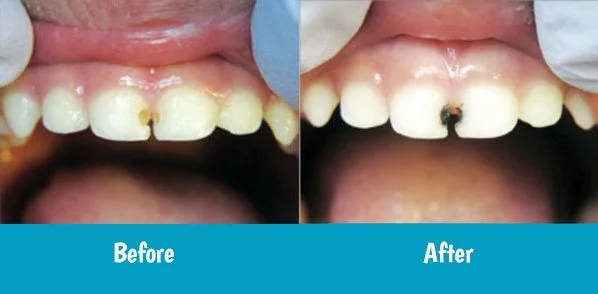
Risks related to SDF include, but are not limited to:
The affected area will stain black permanently. Healthy tooth structure will not stain. Stained tooth structure can be replaced with a filling or crown.
Tooth-colored fillings and crowns may discolor if SDF is applied to them. Color changes on the surface can normally be polished off. The edge between a tooth and filling may keep the color.
If accidentally applied to the skin or gums, a brown or white stain may appear that causes no harm, cannot be washed off and will disappear in one to two weeks.
Your child may notice a metallic taste. This will go away rapidly.
If tooth decay is not arrested, the decay will progress. In that case the tooth will require further treatment, such as repeat SDF, a filling or crown, root canal treatment or extraction.
These side effects may not include all of the possible situations reported by the manufacturer. If you notice other effects, please contact Dr. Ching.
Every reasonable effort will be made to ensure the success of SDF treatment. There is a risk that the procedure will not stop the decay and no guarantee of success is granted or implied.
Alternatives to SDF, not limited to the following:
No treatment, which may lead to continued deterioration of tooth surfaces and cosmetic appearance. Symptoms may increase in severity.
Depending on the location and extent of the tooth decay, other treatment may include placement of fluoride varnish, a filling or crown, extraction or referral for advanced treatment modalities.